

Top Entry Ball Valve
Highlights
- Robust and compact design
- Reliable performance
- Easy in-line maintenance
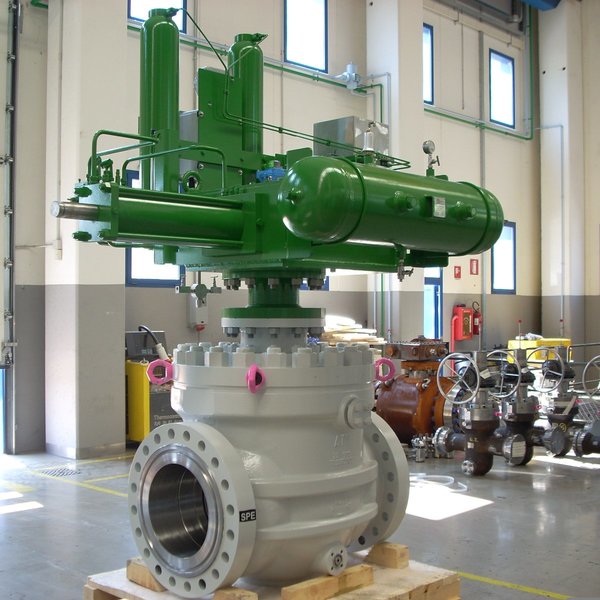
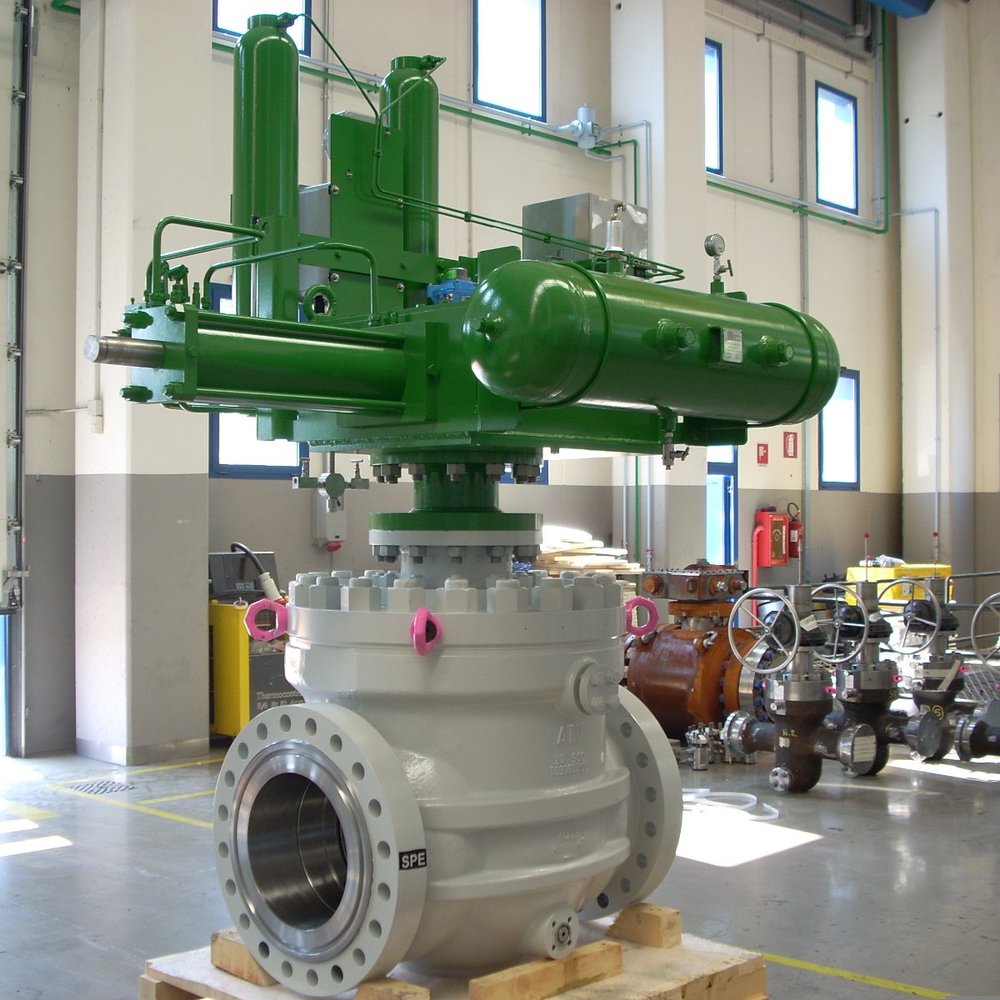
ATV supplies a full range of Top Entry Ball Valves, trunnion mounted, for topside applications in the Oil &Gas exploration, production and transmission.
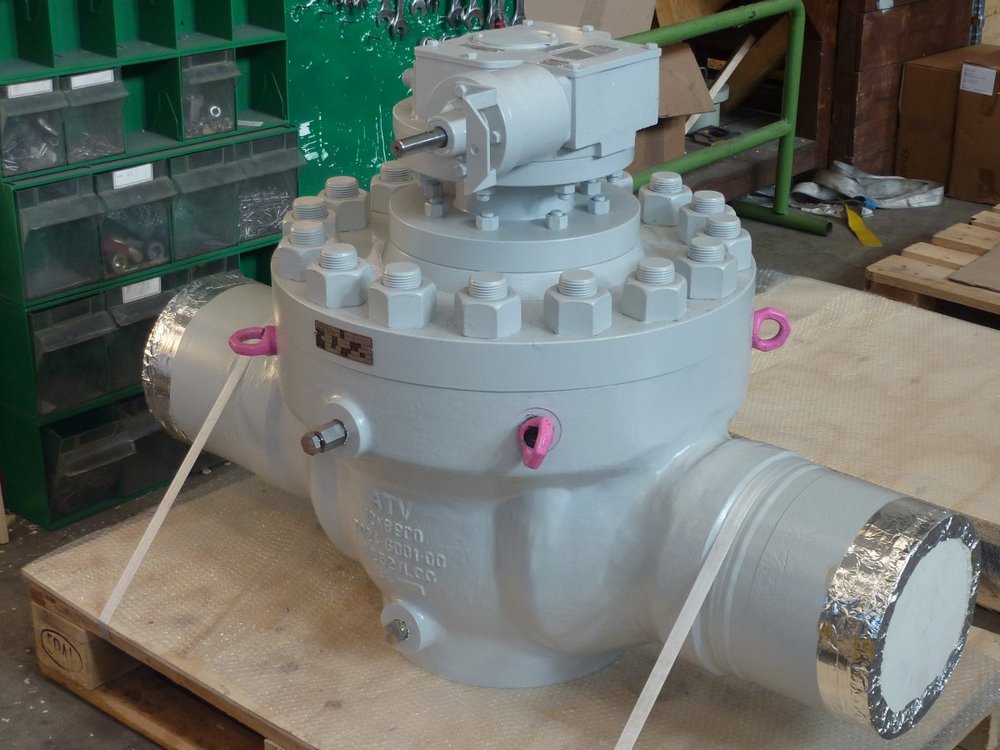
ATV top entry ball valve is the most suitable for severe service conditions, where ease of in-line maintenance may be a concern: the top entry design with bolted bonnet allows free access to the body cavity without removing the valve from the line, even if the space around the valve is restricted. ATV has developed a set of special tools that permits to easily take out both ball and seats, even when the valve is installed on vertical line.
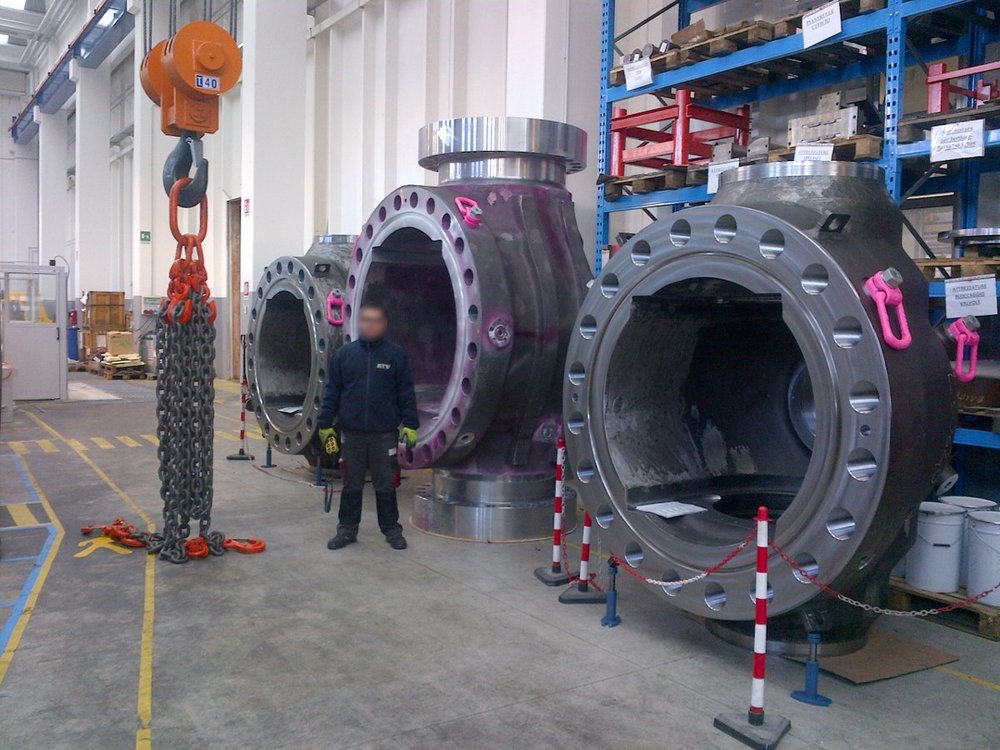
ATV supplies top entry ball valves in a wide range of materials and configurations to meet any specific need of the application and customer’s requirements. Cast body construction is particularly suitable to allow an optimization of the weight due to the typical shape of the body, specially on the biggest sizes, whereas a forge body is the preferred choice for the high pressures. Typically, soft-seated configuration is available for clean service whereas metal-to-metal sealing is the preferred choice for the highest reliability in harsh service with the presence of solid particles, high pressure and high temperature. Many optional features are available for seat designs, seat and stem seals, and end connections.
Materials are sourced from qualified suppliers on the base of specifications that reflect the industry standards (ASTM, NORSOK, BS, DIN or others), but do also incorporate additional requisitions resulting from long experience.
ATV designs, manufactures and tests its products in accordance with all the relevant Industry standards and codes (API, ANSI, ASME, BS, ISO, NACE, PED and others). ATV ball valves are manufactured to conform to API 6A product specification level PSL 3/3G and pressure tested to either API 6A or API 6D requirements.
ATV stresses its willingness to produce engineered valves; therefore, it welcomes requests for special size, class and design requirements.
Images
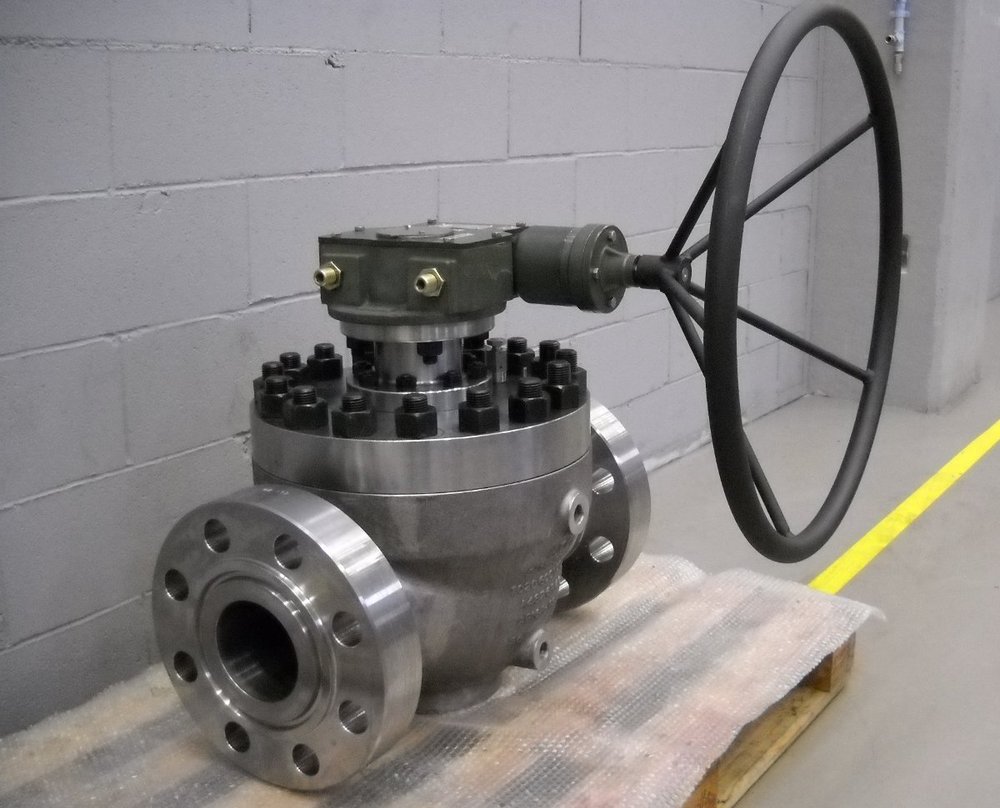
Top Entry Ball Valve - Specifications
SPECIFICATION
| APPLICATIONS | Upstream applications, HIPPS System | Pipelines, rigs, platforms, skids, production plants |
| APPLICABLE STANDARDS | API 6A, ASME VIII Division 1 and 2, ASME B16.34, ASME B16.10, ASME B16.5, NACE MR0175 and other diffused Industry standards | API 6D, ASME VIII Division 1 and 2, ASME B16.34, ASME B16.10, ASME B16.5, NACE MR0175 and other diffused Industry standards |
| RANGES | 1 13/16” ÷ 9”, Class API 3000 and 5000, 1 13/16” ÷ 7 1/16” Class API 10000, 1 13/16” ÷ 5 1/8” Class API 15000. Any other size upon application. | 2” ÷ 60” Class ANSI 600, 2” ÷ 48” Class ANSI 900, 2” ÷ 36” Class ANSI 1500, 2” ÷ 20” Class ANSI 2500. Larger sizes available on request. |
MAIN FEATURES
| Forged body construction | ||
| Cast body construction | ||
| Bolted closure | ||
| Trunnion mounted | ||
| Full bore or reduced bore | ||
| Single piston effect (SPE) | ||
| Soft or Metal seated | ||
| Double Block and Bleed (DBB) | ||
| Anti-Blowout stem | ||
| Fire-Safe design | ||
| Qualification to API 6A Appendix F PR2 |
END CONNECTIONS
| Flanges (to API 6A) | ||
| Flanges (to ASME B16.5 up to 24” and B16.47A for 26” and larger) | ||
| Compact flanges (to Norsok L005) | ||
| Buttwelded ends (to ANSI 16.25) | ||
| Hub ends for clamped connections (as per customer requirement) |
MATERIALS
| Carbon steel | ||
| Low temperature carbon steel | ||
| Low alloy steel | ||
| High yield micro-alloyed steel | ||
| Martensitic and austenitic stainless steel | ||
| Duplex and Superduplex stainless steel | ||
| Nickel Alloy |
OPERATORS
| Handwheel or manual gear | ||
| Electric Multi-Turn | ||
| Pneumatic quarter turn actuator | ||
| Hydraulic quarter turn actuator |
OPTIONS
| CRA Overlay, full or partial | ||
| Wear resisting hardfacing on sealing surfaces | ||
| Stem-Sealant injection | ||
| Seat-Sealant injection | ||
| Stem extension for underground installation | ||
| Extended yoke for high-temperature o low-temperature service | ||
| Cryogenic service design | ||
| Double Block and Bleed (DBB) |